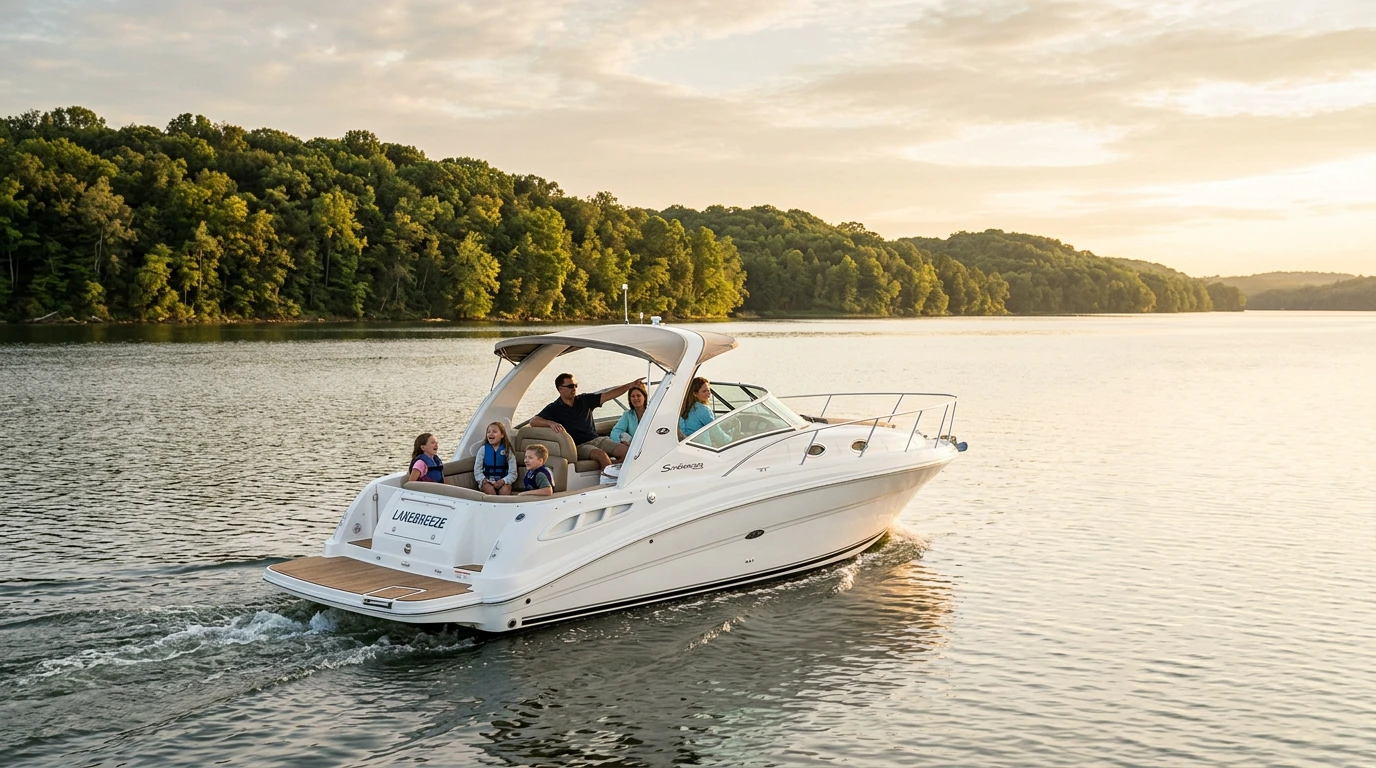
Memorial Day weekend is the unofficial start of boating season across the Midwest, and every year we get the same calls in late May and early June: someone's out on the water, something goes wrong, and they find out their coverage isn't what they thought it was. Usually it's a small fix. Sometimes it's a serious one.
If you own a boat, a jet ski, a pontoon, or even a small fishing rig — or you're thinking about buying one this summer — here's an honest breakdown of how watercraft insurance actually works in our five-state footprint, and the gaps we see most often.
The Midwest Is Boat Country (Even If People Forget)
When people picture boating states they think Florida and California. But the Midwest punches way above its weight:
- Minnesota has the highest boat ownership rate per capita in the country — roughly one registered boat for every six people.
- Michigan consistently ranks in the top five states for registered watercraft, thanks to the Great Lakes plus tens of thousands of inland lakes.
- Wisconsin sits in the top ten nationally, with heavy concentrations on Lake Geneva, the Wisconsin River system, and the Chain O' Lakes.
- Illinois has more than 220,000 registered boats, most of them on Lake Michigan, the Chain O' Lakes, and the Fox River.
- Indiana has a strong inland-lake boating community, particularly in the northern lake country around Lake Wawasee and Lake Maxinkuckee.
That's a lot of boats — and a lot of policies that quietly aren't doing what their owners assume they're doing.
Myth #1: “My Homeowners Policy Covers My Boat.”
It might. A little. Most homeowners policies include some watercraft coverage, but it's narrower than people realize:
- Physical damage to the boat itself is usually capped around $1,000–$1,500, and only while the boat is on your property. Once it's on the trailer heading to the launch, that coverage often disappears.
- Liability typically extends only to small boats — usually outboards under 25 horsepower or sailboats under 26 feet. A modern pontoon, ski boat, or wakeboat is well over that threshold and gets no liability protection from your home policy.
- Personal property on the boat (fishing gear, electronics, your kid's phone) is usually covered by the homeowners policy, but subject to your standard deductible — which is often higher than the value of what was lost.
If you own anything bigger than a small fishing boat or a kayak, you almost certainly need a dedicated watercraft policy. The good news: they're usually inexpensive compared to home or auto.
Myth #2: “Boats Are Like Cars — Liability Is All I Really Need.”
This one comes up constantly, and it's the most expensive misunderstanding we see. Boats are not like cars in two important ways:
1. Salvage and wreck removal can dwarf the boat's value. If your boat sinks at the dock or on the lake, state and federal law generally requires you to remove it. Salvage costs routinely run $10,000–$50,000 even for a modest boat. A liability-only policy won't touch that. You need explicit wreck removal coverage, and you want it written separately from your liability limit so the salvage bill doesn't eat your liability protection.
2. Fuel-spill liability is a different animal. If your boat leaks fuel into Lake Michigan, the Mississippi, or any inland waterway, federal Clean Water Act fines can hit $250,000+ per incident. Most decent watercraft policies include fuel-spill liability up to a certain limit. Many cheap ones don't.
Myth #3: “If I Loan It to a Friend, They're Covered.”
Sometimes. Sometimes not. Watercraft policies vary widely on whether permissive operators are covered, and several of the budget carriers have tightened this in the last two seasons. If you regularly let friends or relatives drive your boat — or if your teenager is going to be running the jet ski with their friends — check that your policy includes permissive use with full liability and physical damage coverage, not a stripped-down version.
What a Solid Midwest Watercraft Policy Actually Looks Like
When we're putting together a watercraft policy for a Midwest boater, here's what we look for:
- Agreed value, not actual cash value. Agreed value pays the number on the policy if the boat is a total loss — no depreciation argument. Actual cash value can leave you well short of replacement, especially on newer boats that depreciate fast in the first three years.
- Liability of at least $300,000, and ideally $500,000 or more if you have any meaningful assets. A serious injury on the water can produce claims that look more like commercial liability than auto liability.
- Separate wreck removal limit so a sinking doesn't exhaust your liability coverage.
- Fuel-spill liability at meaningful limits, especially if you boat on Great Lakes waters where federal jurisdiction is strict.
- On-water towing — the BoatUS-style coverage that gets you back to the dock when the engine quits at sundown. Cheap to add, expensive to do without.
- Trailer coverage for the trailer itself, not just the boat. Many policies treat the trailer as an afterthought.
- Personal effects coverage for the gear, electronics, fishing equipment, and water sports equipment you actually keep on the boat — ideally without forcing you to file a claim under your home policy first.
State-by-State Notes
- Illinois. Liability insurance isn't required by state law to register a boat, but most marinas and dry storage facilities now require proof of liability coverage as a condition of slip rental.
- Indiana. Same setup as Illinois — no state requirement, but marina contracts and HOA-owned lakes usually require liability coverage.
- Michigan. Boat liability isn't mandatory statewide, but several lake associations and marinas in resort areas have written it into their rules. Worth checking before the season.
- Minnesota. No state-mandated coverage, but with the density of boating activity, Minnesota has some of the most competitive watercraft insurance markets in the country — meaning better-than-average coverage at reasonable prices, if you know where to look.
- Wisconsin. Not state-mandated, but increasingly required on private lake associations and at premium marinas around Lake Geneva, Door County, and the Chain O' Lakes region.
Three Questions to Ask Before the First Trip of the Season
- What's actually covered when the boat is on the trailer? A surprising number of claims happen on the highway, not on the water. Make sure your policy covers the boat in transit, not just in use.
- What's the navigation area on the policy? Many policies are limited to inland waters. If you're running into Lake Michigan, Lake Superior, or the Mississippi River system, confirm those bodies of water are explicitly covered.
- Does my umbrella policy sit over my boat liability? If you have a personal umbrella policy, check whether your watercraft is a scheduled covered vehicle on the umbrella. Many umbrellas require the underlying boat liability to hit a minimum limit before the umbrella will sit on top of it.
A Quick Note on Jet Skis and Wave Runners
Personal watercraft (PWC) are almost never adequately covered under a homeowners policy. They're fast, they're responsible for a disproportionate share of on-water injury claims, and most carriers either exclude them entirely from homeowners coverage or cap liability at a token amount. If you own a PWC, it needs its own policy. Period. They're generally inexpensive to insure, often well under $200/year for a single ski.
Want Us to Check Your Current Coverage?
If you already own a boat or PWC, send us your declarations page before the season gets going. We'll tell you in plain English what you actually have, where the gaps are, and what (if anything) is worth changing. No pressure to switch — we'd rather you stay on a policy that works than move to one that doesn't.
And if you're shopping for a new boat this summer, talk to us before you sign — we can quote coverage on the specific hull you're considering so you know the real total cost of ownership before the dealer hands you the keys.
Get in touch here and we'll take a look. Have a great season out there.