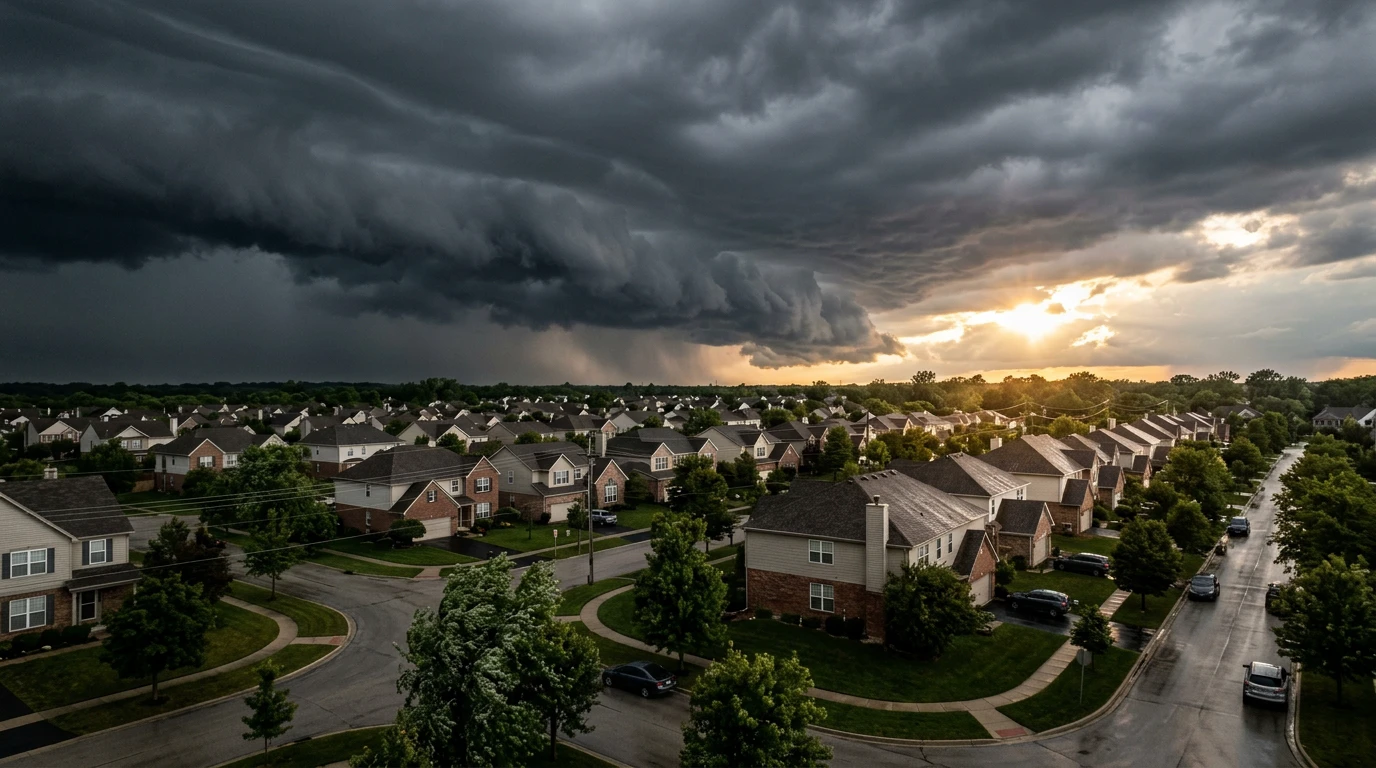
If you opened a renewal notice this spring and felt the air leave the room, you're not alone. Home insurance premiums across Illinois, Indiana, Michigan, Minnesota, and Wisconsin have climbed sharply over the last three years — and the increases aren't slowing down. Between 2021 and 2024, the average Illinois homeowner's premium jumped roughly 50%, and the state is projected to top the national average again with another ~5% increase in 2026.
What's driving it? And is the new Illinois rate-regulation bill (Senate Bill 1486) actually going to change anything for you? Here's an honest, plain-English breakdown of what's happening in our five-state footprint right now.
The Storms Got Bigger. The Bills Followed.
You've probably noticed: hail, straight-line winds, and tornadic storms are hitting the Midwest harder and more often. The industry calls these "severe convective storms" (SCS), and they've quietly become the most expensive insured peril of the 21st century — surpassing hurricanes, according to Aon's latest catastrophe report.
A few numbers that explain the renewal you just opened:
- $100 billion — average annual U.S. insured losses from natural disasters between 2023 and 2025, up from ~$15 billion a decade earlier (Insurance Information Institute).
- $42 billion — insured losses from U.S. severe convective storms through September 2025 alone, with per-event costs up 31% over the previous decade (Moody's).
- #2 — Illinois' rank nationally for hail damage in 2024, behind only Texas (State Farm).
Every state in our footprint — Illinois, Indiana, Michigan, Minnesota, and Wisconsin — sits squarely inside the new "hail belt" that has expanded north and east over the past decade. Carriers paying out more in claims means rates go up everywhere those claims happen. That's not a Chicago story or a downstate story. It's a Midwest story.
What Each of Our Five States Is Dealing With Right Now
The pressure on rates is regional, but each state is reacting differently:
- Illinois. State Farm filed for a 27.2% average rate increase last summer. Allstate followed with hikes totaling almost 9% on more than 200,000 IL policyholders. Gov. Pritzker called rising rates "nothing short of a crisis" and is now backing SB 1486 (more on that below).
- Indiana. Indiana remains one of the more affordable states for homeowners coverage, but carriers have filed double-digit increases across the state, citing the same storm-loss trends.
- Michigan. Hail and wind losses are pushing home premiums up, even as auto premiums are down ~18.8% since the 2019 no-fault reform. A new gubernatorial proposal to let drivers opt out of no-fault entirely could shift the auto landscape again in 2026–2027.
- Minnesota. Hail is the dominant claims driver. Twin Cities homeowners have seen some of the steepest renewal increases in the region, and several carriers have tightened underwriting on older roofs.
- Wisconsin. Still middle-of-the-pack for premium levels, but the same hail and wind trends are pushing rates higher, especially in the southern half of the state.
The Bill Everyone's Talking About: Illinois SB 1486
Unlike most states, Illinois currently has no authority to reject or modify excessive home or auto rate increases. Carriers file the new rate, and it takes effect. At least 14 other states require prior approval above certain thresholds — California, for example, reviews any increase over 7%.
Senate Bill 1486, which passed the Illinois House in March 2026 and now awaits the Senate, would change that. The key provisions:
- Prohibit "excessive, inadequate, or unfairly discriminatory" rates on home and auto insurance.
- Require 60 days' notice before any premium increase of 10% or more, starting July 1, 2027.
- Give the Illinois Department of Insurance authority to review — and potentially reject — new rate filings after July 1, 2027.
- Require carriers to use "credible, state-specific" data when setting rates, to prevent "cost-shifting" losses from other states onto Illinois policyholders.
- Allow the Department to order customer rebates if a rate is later found excessive.
The insurance industry has opposed the bill, arguing it will reduce competition and could push some carriers to limit Illinois business. Consumer groups argue it's overdue. Whether or not it passes the Senate, it's the most significant insurance regulatory proposal Illinois has considered in decades.
One thing the bill does not do: reduce rates retroactively or freeze pricing. Even if it becomes law tomorrow, the rate-review framework doesn't kick in until mid-2027, and existing renewals are unaffected.
What That Means for You as a Homeowner
Whether or not SB 1486 passes, the underlying cost drivers (bigger storms, higher rebuild costs, expanded hail damage) aren't going away. You can't out-legislate the weather. The good news: there's real money on the table in how your policy is structured, and most homeowners haven't looked under the hood in a few years.
Five things worth doing in the next 30 days:
- Reshop your policy. Carriers re-rate every customer, but they don't all raise rates at the same speed. If your carrier hit you with a 20%+ increase, another carrier may write the same risk for materially less. (This is what an independent agency does — we shop 30+ carriers for one quote.)
- Confirm your replacement cost is current. Rebuild costs in the Midwest are up significantly. If your policy still reflects 2020 numbers, you're either underinsured (bad) or paying for outdated coverage assumptions (also bad).
- Raise deductibles where it makes sense. Going from a $1,000 to a $2,500 or $5,000 deductible can knock 10–20% off the premium. If you wouldn't file a small claim anyway, this is a clean win.
- Bundle home and auto. Most carriers in our footprint offer 10–25% multi-policy discounts. Splitting them rarely makes sense once you do the math.
- Add an umbrella, not more dwelling coverage. If you're trying to protect against catastrophic liability, a $1M–$5M umbrella policy costs a fraction of stacking liability on every individual policy.
What We're Telling Our Clients
Honestly? Don't wait on Springfield. SB 1486 may or may not pass, and even if it does, the practical impact on your 2026 renewal is zero. The leverage you have right now is the leverage you've always had: comparing your current carrier against the rest of the market.
We've helped Midwest homeowners cut renewal increases by reshopping carriers, restructuring deductibles, and closing coverage gaps that were costing them money. Sometimes the answer is staying put with the right adjustments. Sometimes it's switching. The point is knowing — not guessing.
Get a Free Policy Review
If your renewal notice landed harder than expected, let's look at it together. As an independent insurance agency, Six Corners Insurance compares homeowners and bundled home + auto policies from 30+ carriers across Illinois, Indiana, Michigan, Minnesota, and Wisconsin. No pressure, no fees, no obligation.
Contact us for a free review — we'll tell you straight whether your current policy is competitive or whether it's time to move.